
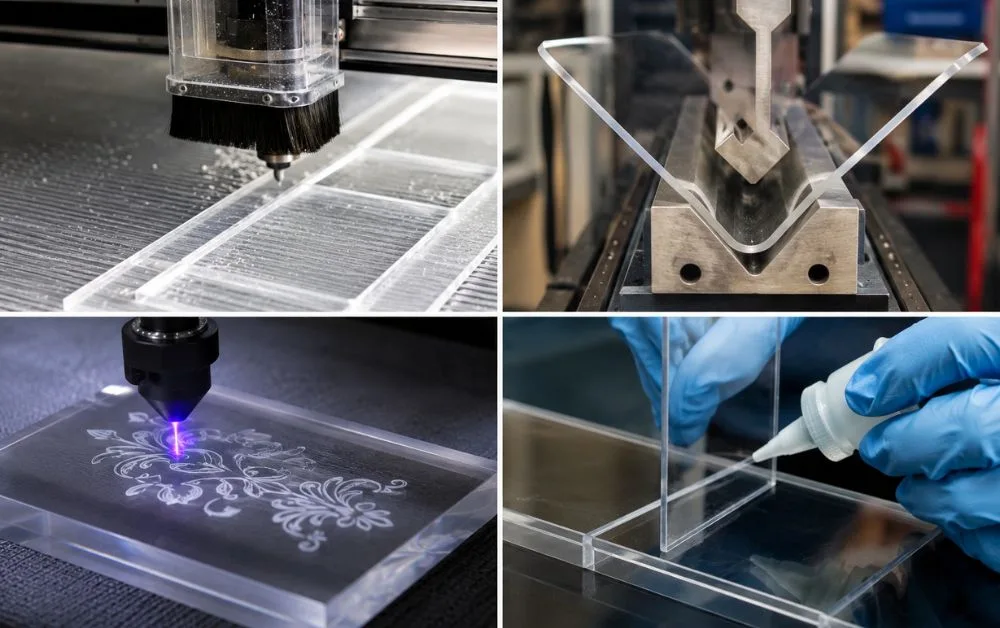
Acrylic is one of the most versatile materials in modern fabrication — used in signage, display, retail fixtures, furniture, medical equipment, automotive components, and architectural applications across the UAE. But working with acrylic effectively requires specific equipment, technical knowledge, and process discipline that separates quality fabricators from those who produce mediocre results. Understanding the key acrylic fabrication processes helps clients make better decisions about what to specify and what to expect from their acrylic fabrication company in UAE. This blog explains the four core fabrication processes — cutting, bending, laser engraving, and UV bonding — and what each contributes to the finished product.
1. Cutting Acrylic: Precision as the Foundation
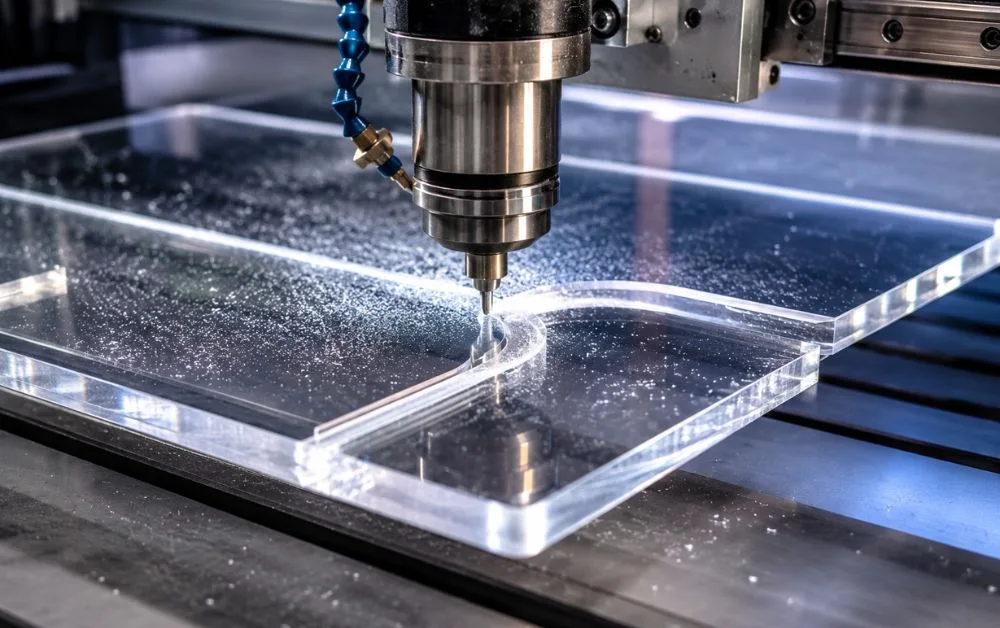
All acrylic fabrication begins with cutting sheet material into the required shapes and sizes. There are two principal methods used by professional acrylic fabrication companies in UAE: CNC routing and laser cutting.
CNC Routing
CNC (Computer Numerical Control) routing uses a rotating cutting bit guided by precise digital instructions to cut acrylic sheets into the required shape. CNC routers are excellent for cutting thick acrylic sheets — typically above 10mm — where laser cutting becomes less practical, and for cutting complex three-dimensional profiles. Well-calibrated CNC routing produces smooth, clean edges that require minimal post-processing. However, for very fine detail work or intricate internal cutouts, laser cutting often provides superior results.
Laser Cutting
Laser cutting uses a focused high-powered laser beam to melt or vaporize acrylic along the cut line. For cast acrylic, laser cutting produces exceptionally clean, polished edges that are optically clear without any secondary polishing — the heat of the laser effectively polishes the cut edge as it works. This makes laser cutting particularly valuable for clear acrylic applications where the edge finish is visible, such as award trophies, edge-lit signage, and display cases. Laser cutting is also capable of very fine detail, making it the right choice for intricate shapes, small text cutouts, and complex decorative profiles.
2. Bending and Forming: Creating Three-Dimensional Shapes
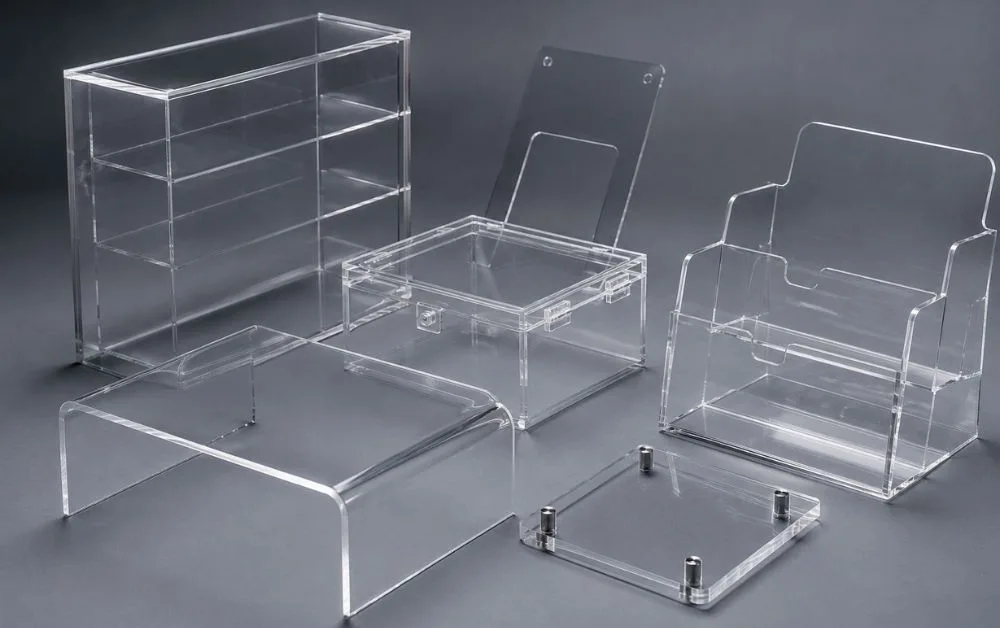
Acrylic’s thermoplastic nature — the fact that it can be softened with heat and formed into new shapes, then hardened again as it cools — is one of its most useful properties for fabrication. Bending is used to create display cases, protective covers, signage housings, retail point-of-sale displays, and many other three-dimensional acrylic products.
Line bending uses a heated wire or strip to heat the acrylic along a precise line, allowing it to be bent to a specific angle. Oven bending heats a larger area of the sheet to allow more complex curved or compound forms. Vacuum forming presses heated acrylic sheet against a mold to create complex three-dimensional shapes with consistent wall thickness. Each method has its appropriate application range, and a skilled acrylic fabrication company in UAE will select the right technique for each product requirement.
Related read:-Choosing the Right Acrylic Fabrication Company in UAE
3. Laser Engraving: Adding Permanent Detail
Laser engraving uses a focused laser at lower power than cutting mode to ablate the acrylic surface to a controlled depth, creating permanent marks in the material. This process is used for text, logos, decorative patterns, and technical markings on acrylic products.
The engraving can be left as a frosted surface mark, which appears white against clear acrylic and creates strong visual contrast, or it can be filled with color — UV ink, paint, or foil — to create colored text or logos within the engraved area. On colored acrylic, engraving reveals the clear or differently colored layer beneath the surface, creating a dual-tone effect.
For awards and trophies, engraving is the standard method for personalizing text — recipient names, achievement descriptions, dates — on the acrylic surface. For signage and wayfinding products, engraving provides permanent, durable text that cannot peel or fade. For technical and industrial applications, engraving provides permanent part identification and instruction text.
4. UV Bonding: Creating Invisible Joints
Joining two pieces of acrylic together invisibly is one of the most technically demanding aspects of acrylic fabrication. The standard method used by professional acrylic fabrication companies in UAE is UV bonding, also called solvent or UV cement bonding.
UV bonding uses a thin, water-like adhesive that is applied to the joint between two acrylic pieces and then activated by exposure to UV light. When properly applied, the adhesive creates a molecular bond between the two acrylic surfaces that is optically clear and structurally strong. A well-executed UV bond is essentially invisible — the joint between the two acrylic pieces appears as a seamless continuation of the material, with no visible glue line or color change. This quality of join is essential for display cases, box constructions, retail fixtures, and any acrylic product where the joint would be aesthetically unacceptable if visible.
Surface Finishing Options
After cutting, bending, and joining, acrylic components may require surface finishing to achieve the desired final appearance. Machine polishing removes minor scratches and restores optical clarity to cut edges that require a polished finish. Satin finishing creates a consistent matte texture on surfaces that should not be fully reflective. Protective film removal requires care to avoid scratching the surface before the product is handed over.
Why Partner with a Specialist Acrylic Fabrication Company in UAE
The quality difference between specialist and generalist fabricators is significant in acrylic work. Specialists invest in high-quality cutting and engraving equipment, maintain calibrated machines, employ technicians with specific acrylic processing expertise, and have quality control procedures to catch dimensional errors and finish defects before products leave the workshop. Acrylic Market is an established acrylic fabrication company in UAE, providing all four core fabrication services — cutting, bending, laser engraving, and UV bonding — alongside finishing and assembly, with the precision and quality control that demanding projects require.
Conclusion
Understanding the core processes of acrylic fabrication — cutting, bending, laser engraving, and UV bonding — helps clients work more effectively with their acrylic fabrication company in UAE and specify products that will be produced correctly the first time. Each process requires skill, appropriate equipment, and process discipline to produce results that are accurate, clean, and durable. Acrylic Market combines all of these capabilities in a single specialist operation, providing UAE businesses with reliable access to high-quality acrylic fabrication across the full range of commercial and industrial applications.