
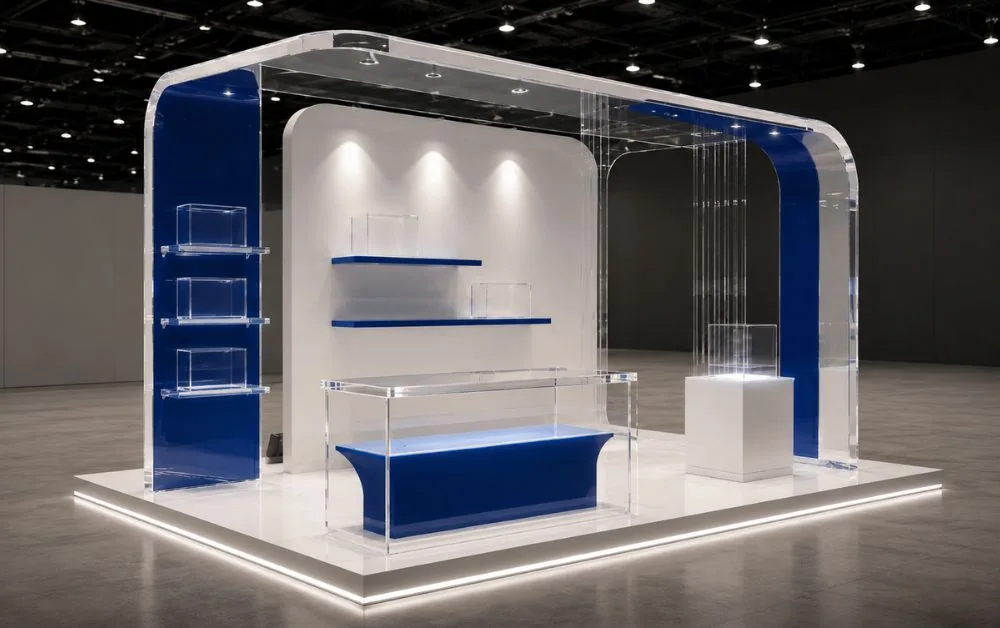
Dubai’s exhibition and trade show calendar is one of the busiest in the world — with events at the Dubai World Trade Centre, Dubai Exhibition Centre, and numerous specialist venue facilities hosting international audiences across every industry sector. In this competitive environment, exhibitors face the challenge of creating stand designs that capture attention, project brand quality, and engage visitors effectively. Acrylic Exhibition stands in Dubai have emerged as a preferred solution for brands seeking the combination of visual impact, design flexibility, and structural durability that exhibition environments demand.
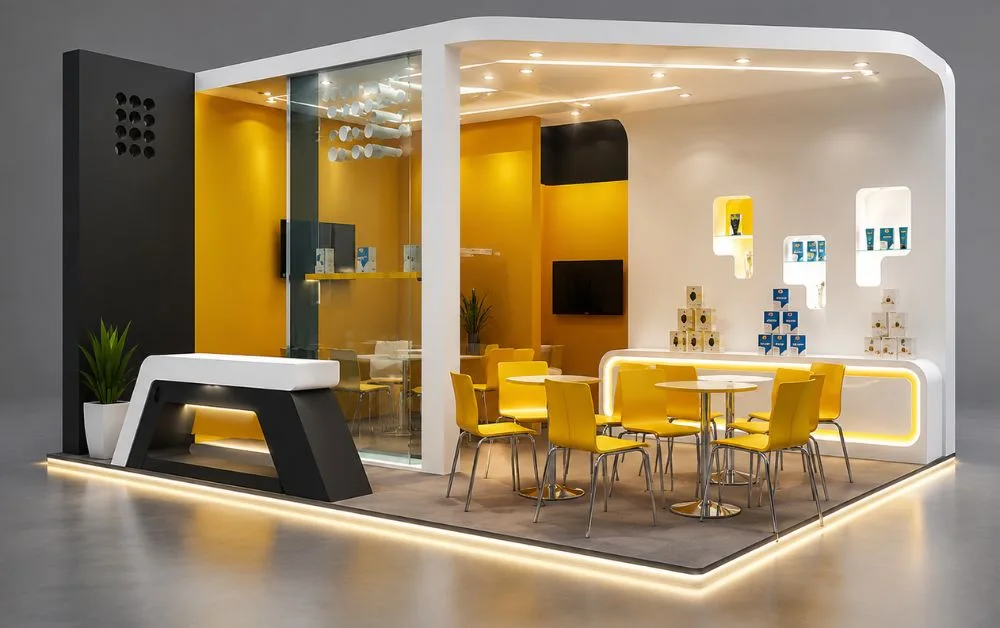
Why Acrylic Works for Exhibition Environments
Exhibition stands operate in demanding conditions — multiple assembly and disassembly cycles, transport between venues, constant visitor interaction, and the need to maintain a premium appearance under bright exhibition lighting throughout multi-day events. Acrylic’s physical properties make it particularly well-suited to these demands.
Acrylic’s light weight compared to glass makes exhibition elements manageable for stand assembly teams without compromising the premium visual quality that transparent materials deliver. Its dimensional stability ensures that display panels, counters, and display cases maintain their precision geometry across temperature variations in exhibition hall environments. And unlike glass, acrylic does not shatter on impact — delivering meaningful resilience against the inevitable minor collisions and contact that exhibition stands experience during busy events.
The Role of the Acrylic Fabricator in Dubai
Creating exhibition-quality acrylic components requires specialist knowledge of material behaviour, jointing techniques, and finishing processes that distinguish a professional acrylic fabricator in Dubai from a general sign maker. The most capable acrylic fabricators in Dubai combine CNC machining, laser cutting, thermoforming, and hand-finishing capabilities that allow them to produce complex three-dimensional acrylic exhibition elements to precise specifications.
Custom fabrication is particularly important for exhibition applications because stand design is frequently driven by specific dimensional requirements, integrated lighting specifications, and brand aesthetic standards that cannot be met by off-the-shelf acrylic products. A capable acrylic company in Dubai will engage with the exhibitor’s design team from concept stage — contributing material knowledge and fabrication expertise to develop designs that are both visually compelling and practically achievable.
See also-Acrylic Exhibition Stands: Design Ideas That Attract More Visitors
Acrylic Products in UAE: Popular Exhibition Applications
Among the broad range of acrylic products in UAE exhibition use, several categories are particularly popular. Illuminated acrylic panels with LED backlighting create dramatic brand displays that perform exceptionally under exhibition lighting conditions. Acrylic product display cases protect valuable items while allowing full 360° visibility. Acrylic reception counters and information desks combine brand presence with practical functionality. Acrylic signage panels, hanging displays, and overhead banners contribute to the overall stand identity system.
Custom Colour, Texture, and Finish Options
Modern acrylic fabrication encompasses far more than clear material. Coloured acrylic sheets allow exhibition elements to incorporate brand colours precisely. Frosted acrylic creates subtle, sophisticated display backgrounds. Mirror acrylic adds dramatic reflective effects that amplify light and create a sense of space within compact stand footprints. UV printing on acrylic surfaces allows full-colour graphic integration with photographic quality.
Practical Considerations for Exhibition Acrylic
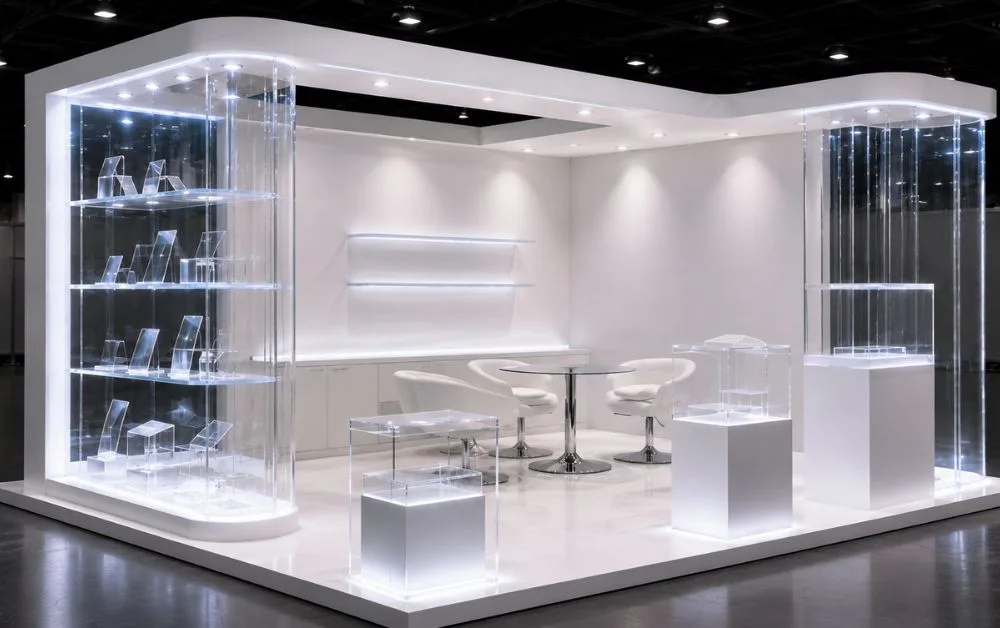
For exhibition use specifically, several practical considerations should guide the specification of acrylic elements: ensure sufficient thickness for structural stability in freestanding elements (at minimum 5mm for display panels, 10mm or above for structural components); use cast acrylic rather than extruded where optical clarity and colour consistency are critical; and specify UV-stable materials for any elements that will be used under intense artificial lighting for extended periods.